What is a Load Balancer? Complete Guide for System Design
As applications grow and handle millions of users, managing traffic efficiently becomes a major challenge. A load balancer plays a crucial role in distributing incoming requests across multiple servers to ensure high performance, reliability, and availability.
Load balancers are a core component of modern system design and are widely used in scalable applications like e-commerce platforms, streaming services, and cloud-based systems.
What is a Load Balancer?
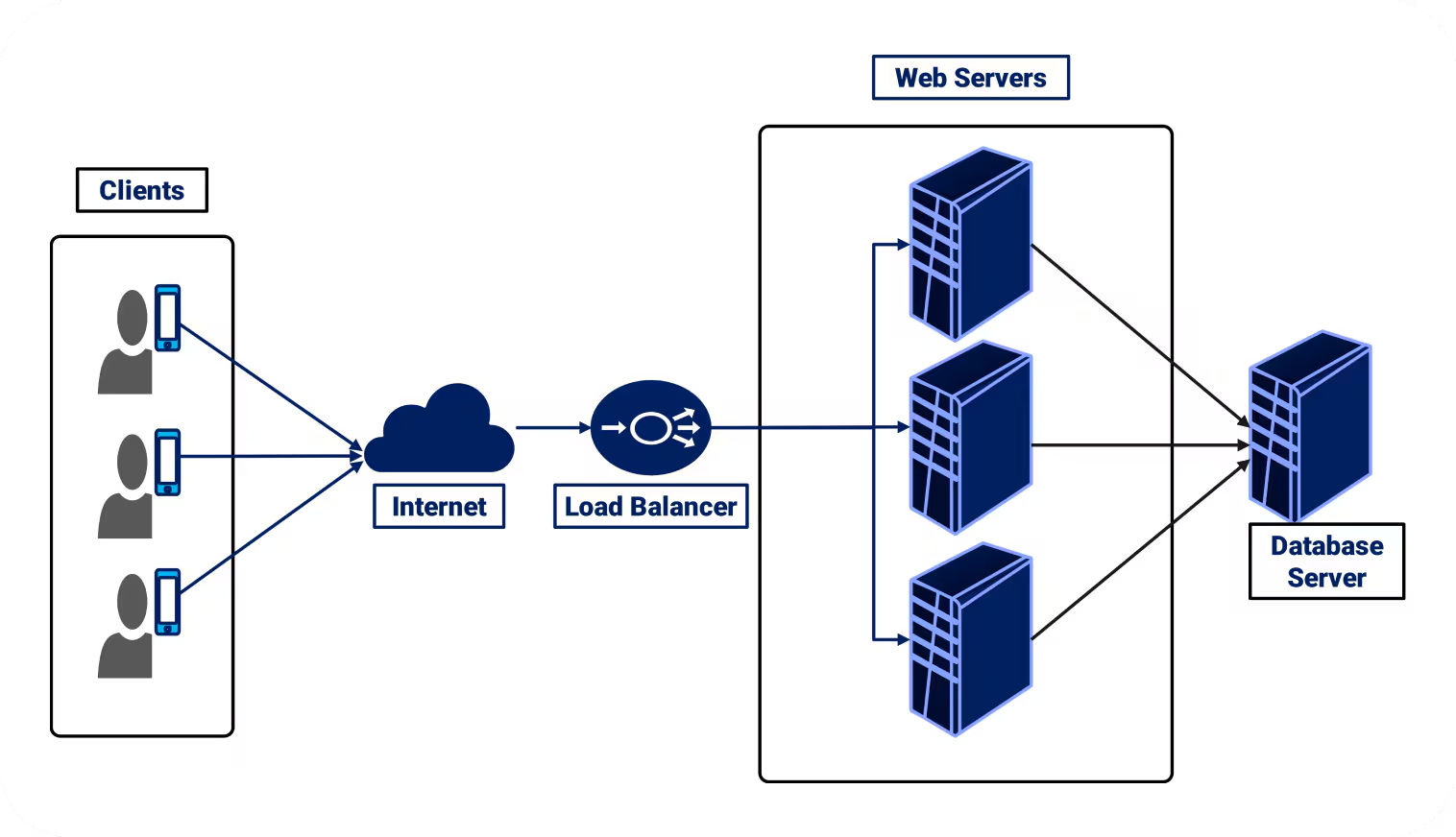
A load balancer is a system that distributes incoming network traffic across multiple servers. Instead of sending all requests to a single server, it ensures that traffic is shared evenly, preventing overload and improving system performance.
It acts as a traffic manager between users and backend servers, ensuring that no single server becomes a bottleneck.
Why Do We Need a Load Balancer?
- High Availability: Keeps the system running even if some servers fail
- Scalability: Helps handle increasing traffic efficiently
- Improved Performance: Distributes load evenly
- Fault Tolerance: Prevents system crashes
How Does a Load Balancer Work?
When a user sends a request, the load balancer receives it first. It then selects a backend server based on a predefined algorithm and forwards the request to that server.
The response is sent back to the user through the load balancer, making the process seamless and efficient.
Types of Load Balancers
1. Layer 4 Load Balancer (Transport Layer)
Operates at the transport layer and distributes traffic based on IP address and port number.
- Faster performance
- Less complex
- Does not inspect application data
2. Layer 7 Load Balancer (Application Layer)
Operates at the application layer and can make routing decisions based on HTTP headers, URLs, and cookies.
- More intelligent routing
- Supports content-based routing
- Higher flexibility
Load Balancing Algorithms
1. Round Robin
Distributes requests sequentially across servers.
2. Least Connections
Sends requests to the server with the fewest active connections.
3. IP Hash
Routes requests based on client IP to maintain session consistency.
Real-World Examples
Companies like Amazon, Netflix, and Google use load balancers to handle massive traffic. These systems distribute millions of requests across thousands of servers to ensure seamless user experience.
Popular Load Balancing Tools
- NGINX
- HAProxy
- AWS Elastic Load Balancer
- Google Cloud Load Balancing
When Should You Use a Load Balancer?
- When your application receives high traffic
- When you want high availability
- When using multiple servers
- When building scalable systems
Final Thoughts
A load balancer is a fundamental component of modern system design. It ensures that applications remain fast, reliable, and scalable even under heavy traffic.
Understanding how load balancing works is essential for designing high-performance systems and preparing for system design interviews.